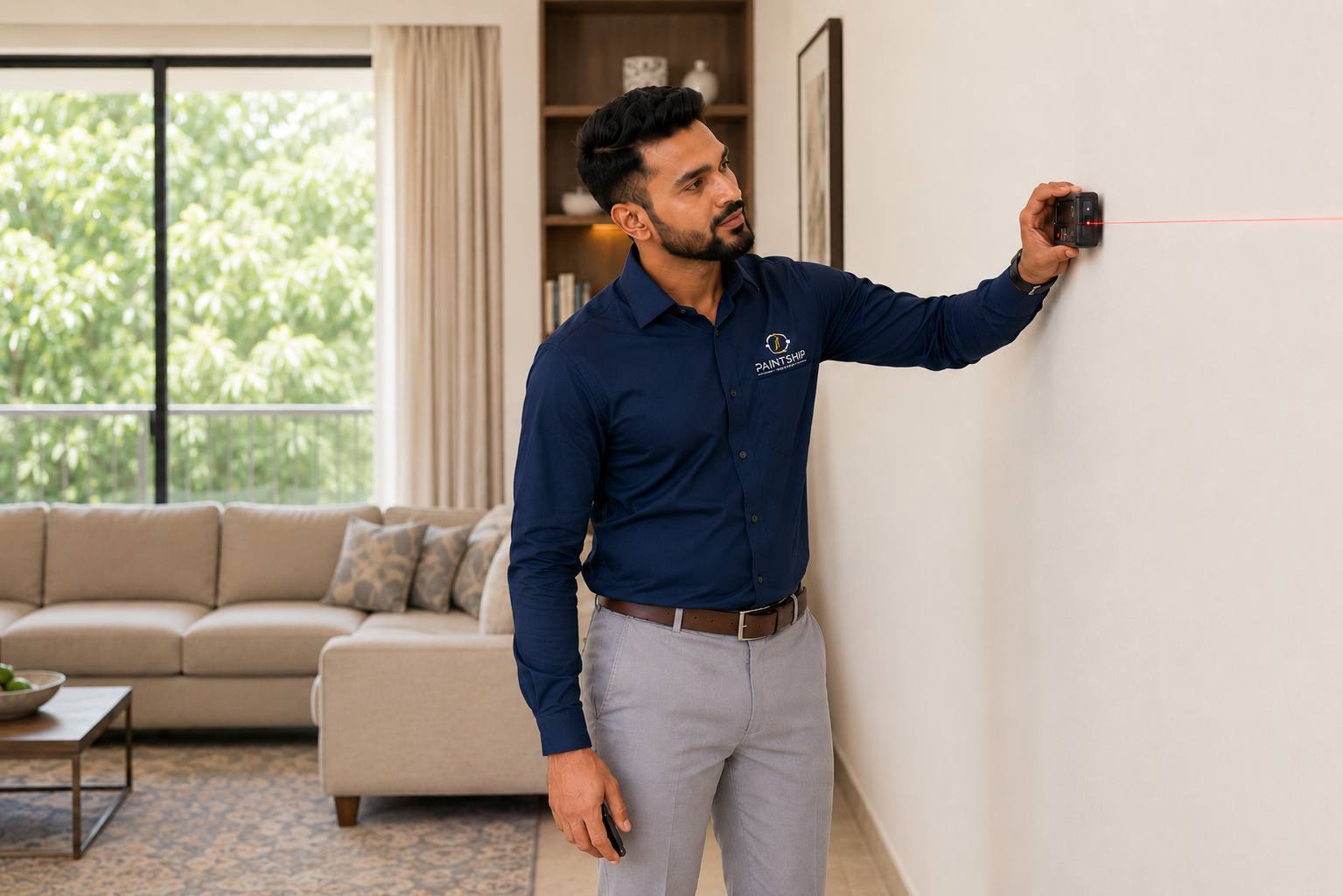
A well-run interior painting project follows a clear sequence — inspection, preparation, painting and quality checks — rather than painters simply showing up with buckets and rollers. Knowing what each stage involves helps you plan around the work and know what to expect at every step.
Initial site visit
Every project starts with a site visit. A supervisor walks through the home, discusses your requirements room by room, and gets a first look at wall and ceiling condition. This is also the stage where you can raise specific concerns — a bathroom ceiling with a damp patch, a bedroom wall you want repainted in a new colour, or a hallway that gets heavy scuffing.
Wall and surface inspection
Beyond a general walkthrough, each wall and ceiling is inspected more closely for cracks, dampness, flaking paint, algae or uneven plaster. This inspection determines how much preparation work each surface will need, and whether any underlying issue — like a water leak — needs to be addressed before painting can proceed.
Measurement and scope confirmation
Once the walkthrough and inspection are done, the supervisor measures the paintable area and confirms the scope with you — which rooms, which surfaces, and what level of preparation is required. This scope forms the basis of your quotation and the project plan.
Colour and finish selection
With the scope confirmed, attention turns to colour and finish. You can review shade options and finish types — matte, satin or premium washable ranges — and decide what suits each room. Supervisors can offer guidance based on light, room use and existing furnishings, but the final choice is always yours.
Furniture and floor protection
Before any prep work begins, furniture is moved to the centre of the room or covered, and flooring is protected with sheeting. This step is done thoroughly and is not skipped or rushed, since it directly affects how much cleanup is needed later and how well your belongings are protected.
Crack repair and surface preparation
Any cracks, holes or damaged sections identified during inspection are repaired at this stage. Loose or flaking old paint is scraped back, and surfaces are cleaned so that fresh coats bond properly rather than sitting on top of an unstable base.
Putty and sanding where required
Where walls need it, putty is applied to even out the surface and fill minor imperfections, followed by sanding to create a smooth base. This step has a big impact on the final finish — a well-prepared surface holds paint more evenly and looks noticeably better once painted.
Primer application
A primer coat is applied before the finish coats. Primer helps paint adhere properly, improves colour uniformity, and can help block stains or patches from showing through the final coats, particularly on repainted surfaces or areas that were repaired.
First and final paint coats
Painters then apply the finish coats using the selected product. The number of coats depends on the existing colour, the surface condition and the paint chosen — this is discussed and confirmed with you rather than left as a guess. Each coat is allowed to dry properly before the next is applied.
Supervisor quality inspection
Once painting is complete in a room, a supervisor reviews the finish for coverage, evenness and any missed spots or touch-ups needed. This inspection happens before the room is considered complete, so issues are caught and corrected early rather than after the whole home is done.
Cleanup and final walkthrough
After painting and touch-ups are finished, protective sheeting is removed, floors are cleaned, and furniture is moved back into place. A final walkthrough with you confirms that every room meets the agreed standard before the project is signed off.
Typical timeline factors
Project duration depends on the size of the home, the number of rooms, how much surface preparation is needed, and whether the property is occupied or vacant. Rather than quoting a fixed number of days upfront, a realistic schedule is shared once the scope is confirmed during the site visit.
Homeowner preparation checklist
- Set aside personal or fragile items you would prefer to move yourself
- Flag any known problem areas — leaks, damp patches, old repairs
- Confirm access arrangements if you live in an apartment with society rules
- Decide on colour and finish choices ahead of the scheduled start date
- Plan around which rooms will be worked on first if you are staying at home
FAQs
Can I stay at home while interior painting is done?
Yes. Work is usually sequenced room by room with furniture and flooring protected, so the rest of the home stays usable.
How many coats of paint are applied?
This depends on the existing wall colour, condition and the product used, and is confirmed with you before work begins.
What happens if a wall has cracks or dampness?
Any cracks, dampness or damage found during inspection or prep is flagged and addressed before painting proceeds.
Who checks the quality before handover?
A supervisor inspects coverage, evenness and touch-ups in every room before the project is signed off.
How long does a typical project take?
Timelines vary with home size and scope, so an estimated schedule is shared after the site visit and measurement.