Every homeowner planning a painting project wants to know one thing first: what will it cost? The honest answer is that it depends on your specific property — its size, the condition of its walls, and the paint system you choose. This guide walks through every factor that shapes the final number, so you know exactly what a quotation is based on before anyone picks up a brush.
What determines home painting cost?
Painting cost is not a single number that applies to every home. It is built up from several variables working together: the total paintable area, how much surface repair is needed, the brand and finish of paint selected, the labour required to execute the work properly, and whether the property is occupied or vacant during the project. Two homes of the same size can have very different costs if one has fresh, even walls and the other has years of cracks, dampness patches and old peeling paint.
Because of this, any number quoted without seeing the property is, at best, a rough starting point. A dependable quotation is always based on what is actually measured and inspected on site.
Interior versus exterior cost factors
Interior and exterior painting involve different cost drivers. Interior work is priced around wall and ceiling area, the number of rooms, and how much furniture protection and prep work each room needs. Exterior work usually involves a different set of considerations — height access for upper floors, weatherproofing requirements, and tougher surface preparation to deal with sun and rain exposure over the years.
As a result, exterior painting often costs more per unit of painted area than interior painting, simply because the surfaces have to withstand harsher conditions and the paint systems used for exteriors are built for durability.
Property size and wall condition
The most obvious factor is size — more wall and ceiling area naturally means more material and more labour hours. But size alone does not tell the full story. A smaller home with heavily damaged walls can sometimes need more preparatory work than a larger home in good condition. This is why PaintShip always separates "area" and "condition" as two distinct inputs when preparing a quotation, rather than treating them as one.
Surface preparation requirements
Surface preparation is often the most variable part of a painting project. Walls with hairline cracks, larger structural cracks, dampness, algae growth, or flaking old paint all require different levels of correction before a fresh coat can be applied. Skipping proper preparation might look fine for a few months, but it significantly shortens how long the new paint lasts. This is why preparation scope is assessed carefully during the site visit, room by room and wall by wall.
Paint product and finish selection
The brand, product line and finish you choose — for example, a basic emulsion versus a premium washable or weatherproof range — has a direct impact on cost. Higher-end products typically offer better coverage, durability and washability, but they also cost more per litre. PaintShip works with established brands including Asian Paints, and the specific product recommendation depends on the surface, the room's use, and your budget priorities.
There is no single "right" choice here. A rental property may prioritise durability and easy maintenance, while a primary residence's living room may prioritise a premium finish and appearance.
Labour and supervision
Labour cost reflects the number of painters required, the complexity of the job, and the number of coats needed to achieve an even, lasting finish. PaintShip projects are supervised throughout, which adds a layer of quality control but is factored into the overall project cost rather than charged as a separate line item that surprises you later.
Occupied versus vacant property
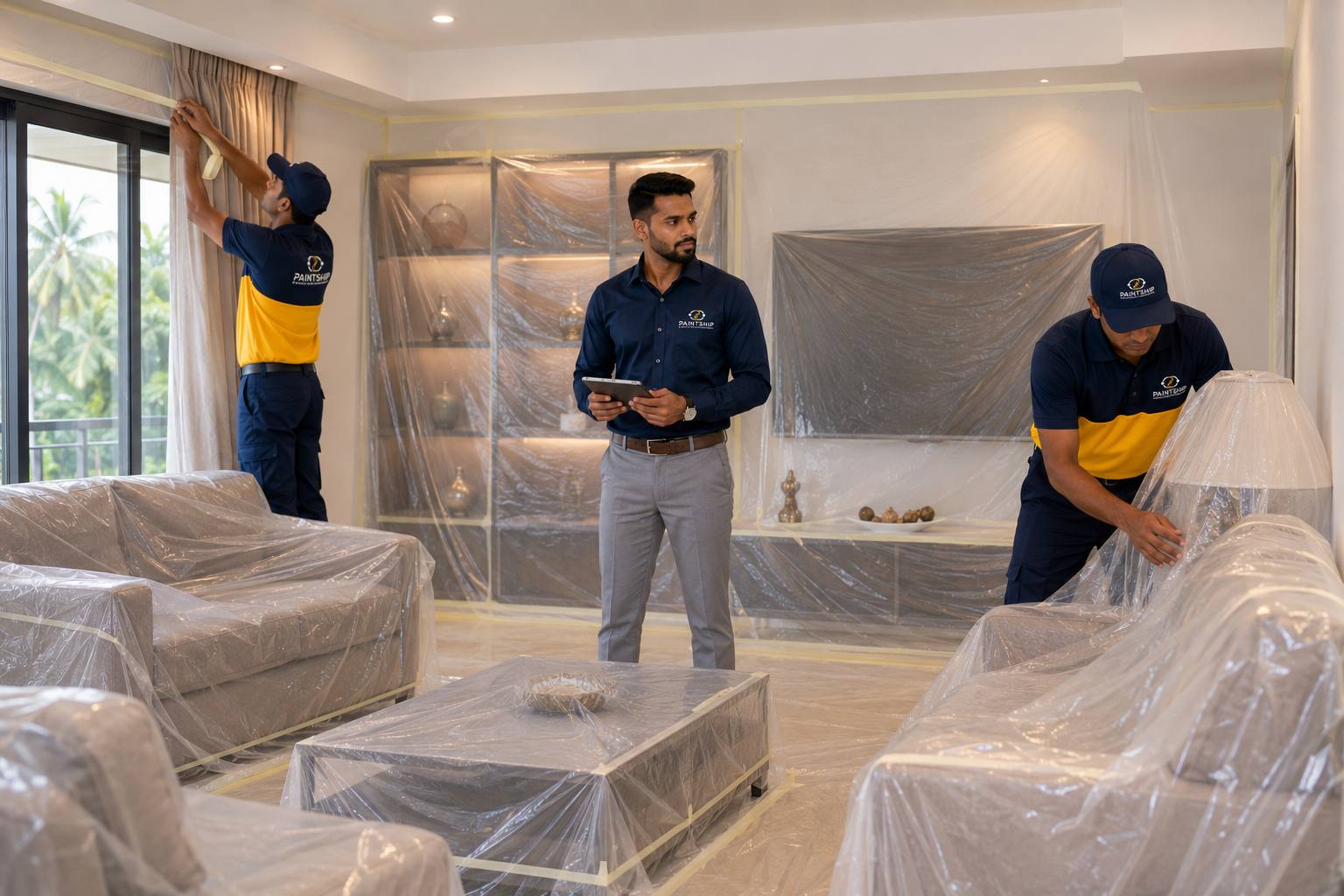
Whether you are living in the home during the work affects both timeline and approach, and can influence cost. Occupied homes are usually painted room by room, with furniture and flooring protected as work progresses, which takes more careful sequencing than working through a fully vacant property. Vacant homes generally allow for a faster, more continuous workflow.
Apartment, villa and independent-house considerations
The type of property changes the practical logistics of a project. Apartments often involve society rules around working hours, material movement and lift access, all of which are planned for in advance. Villas and independent houses typically have more exterior surface area and may need scaffolding or ladder access for upper floors and boundary walls. These logistics do not always show up as a separate cost line, but they do influence the time and resources a project needs.
Why site measurement is necessary
A site visit lets a supervisor measure actual wall and ceiling area, inspect every surface up close, and note anything — cracks, dampness, uneven plaster — that will affect preparation. This is the only reliable way to move from a rough estimate to an accurate, itemised quotation. It also gives you the chance to discuss paint options, ask questions, and understand the proposed scope before committing to anything.
How PaintShip prepares a quotation
After the site visit, PaintShip puts together a quotation that reflects the measured area, the surface preparation identified, the paint system selected, and the labour required to complete the work to a supervised standard. The quotation is itemised so you can see what each part of the cost is for, rather than receiving a single unexplained figure.
Cost-planning checklist
- Decide which areas need painting — full home, specific rooms, or exterior only
- Note any visible wall issues: cracks, dampness, peeling or staining
- Think about whether you will be living at home during the work
- Shortlist a paint finish priority — durability, washability, or premium appearance
- Set a rough budget range so paint options can be discussed within it
- Book a site visit so measurements and condition can be confirmed in person
FAQs
Can I get an exact price over the phone?
No. An accurate quote needs a site visit, since wall condition and area vary from home to home even in similar-sized properties.
Is a 2BHK cheaper to paint than a 3BHK?
Usually yes, since there is less wall area to cover, but the final cost still depends on ceiling height, wall condition and the finish chosen.
Does surface repair add significantly to the cost?
It can, if there is extensive cracking, dampness or old peeling paint that needs proper rectification before fresh paint is applied.
Is exterior painting more expensive than interior?
Exterior work often costs more per painted area because of weatherproofing needs, height access and tougher surface preparation.
How is the final quotation prepared?
A supervisor measures the property, inspects every surface and confirms the paint system and scope with you before sharing an itemised quotation.